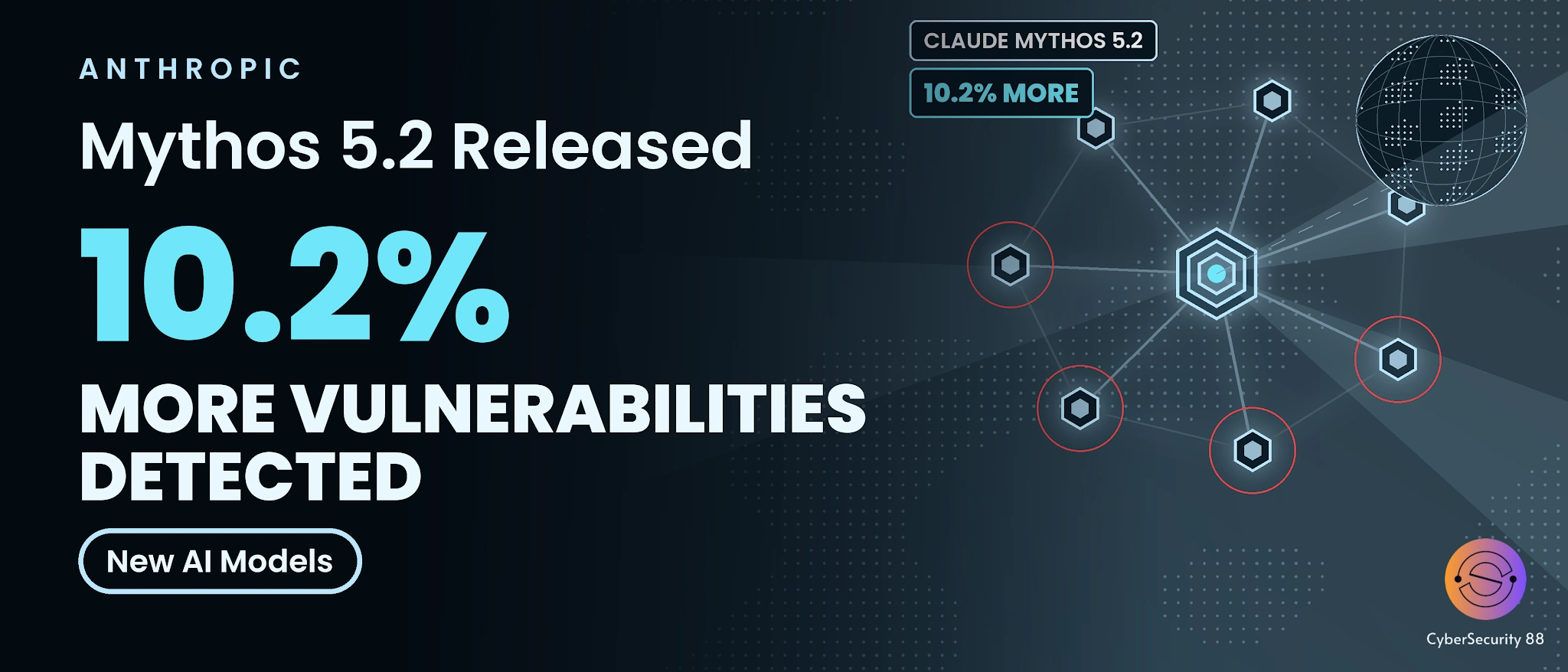
Anthropic has rolled out Claude Mythos 5.2 to selected partners and Claude Fable 5.2 to regular users, bringing improved cybersecurity capabilities, reduced false-positive blocks on benign security tasks for Fable 5.2, and enhanced bug-detection performance for Mythos 5.2. The release was detailed on 16 November 2026, marking a significant update to Anthropic’s suite of artificial intelligence models designed for security engineering and general use.
The newly released models build on previous iterations like Mythos 5.1 and Fable 5.1, aiming to balance safety safeguards with operational utility for security professionals. Mythos 5.2 is described by Anthropic as its most capable model for cybersecurity engineering. It outperforms Fable 5.2 at finding vulnerabilities, reproducing them, and developing fixes.
Technical evaluations demonstrate the advanced capabilities of the updated models. According to Anthropic’s CVE Rediscovery evaluation, Mythos 5.2 detects 10.2% more vulnerabilities than Claude Opus 5.5 and 14.4% more than Mythos 5.1. Additionally, a security company reported to Anthropic that one in six confirmed bugs identified by Mythos 5.2 were missed by every other frontier model tested.
In parallel, Fable 5.2 features additional cybersecurity and biology safeguards to restrict high-risk activities such as penetration testing, exploit generation, and certain binary analysis vulnerability research. When Fable detects high-risk activity, it automatically switches to Opus 4.8 for cybersecurity-related responses. Anthropic also tested Mythos 5.2 against sandbox escape attempts where artificial intelligence agents try to access files or credentials outside their permitted environments.
The practical impact of these updates addresses long-standing usability issues for security practitioners using artificial intelligence tools. During early testing across Claude.ai, Claude Code, and Cowork, Anthropic reduced unnecessary blocks by approximately 60% for cybersecurity requests in Fable 5.2 compared to Fable 5.1, greatly minimizing friction during legitimate defensive tasks.
Despite these improvements, Anthropic acknowledges that its evaluations cannot catch every potential failure before release, especially as models recognize when they are being tested. Organisations deploying advanced artificial intelligence models should maintain rigorous oversight, follow general security best practices, and evaluate model outputs carefully within secure environments to mitigate residual risks.
Stay alert, and keep your security measures updated!
Source: Follow cybersecurity88 on X and LinkedIn for the latest cybersecurity news