A new cybersecurity report reveals a prolonged cyber espionage campaign by a China-nexus threat actor, dubbed “Weaver Ant,” that maintained persistent access to a major telecommunications provider for over four years.

This operation highlights the sophistication of state-sponsored cyber espionage,
- Targeting critical telecommunications infrastructure
- Demonstrating advanced persistent threat (APT) capabilities
- Exploiting multiple technical vulnerabilities across network environments
Operational Characteristics
Time Zone: GMT +8
Work Pattern:Active during standard working hours and Avoided holidays.
Persistence: Maintained access for over four years
Adaptability: Quickly responded to eradication attempts
Attack Chain Breakdown
Initial Infiltration
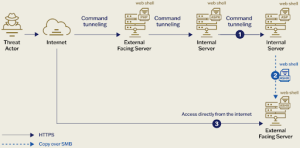
The hackers’ primary weapon was a series of sophisticated “web shells” – small pieces of malicious code hidden on web servers that allow remote access and control. These weren’t just ordinary hacking tools. The group used two particularly innovative variants: an encrypted version of a well-known hacking tool called China Chopper and a custom “in-memory” web shell that could execute malicious code without leaving any trace on the computer’s hard drive.
Evasion and Persistence Mechanism
- Keyword-based evasion techniques
- Payload truncation to bypass security filters
- Encryption to hide malicious content
- Minimal, single-line code designs
Lateral Movement Techniques
- Used compromised servers as proxy servers
- Redirected traffic between different network segments
- Enabled access to internal servers not directly connected to the internet
- Forwarded requests between web servers
- Supported both ASPX and PHP versions
- Dynamically constructed and executed cURL commands
Reconnaissance and Information Gathering
The main objective is to Identify high-privilege accounts and Map critical server infrastructure.
-
- Active Directory Enumeration
Commands used
-
- Get-DomainUserEven
- Get-DomainSubnet
- Get-DomainUser
- Get-NetSession
Credential Harvesting
-
- Retrieved web server access logs
- Extracted configuration files (web.config, applicationHost.config)
- Collected clear-text credentials
Advanced Execution Techniques
- PowerShell Without PowerShell
- Leveraged System.Management.Automation.dll
- Executed PowerShell commands without using PowerShell.exe
- Bypassed traditional monitoring tools
- Lateral Movement Methods
- Used Invoke-SMBClient for remote interactions
- Employed NTLM hash authentication
- Accessed remote SMB shares
- Deployed additional web shells on internal servers
Defense Evasion
- Manipulated kernel-level tracing
- Suppressed critical system logs
- Overwrote AmsiScanBuffer function
- Rendered security tool integrations ineffective
- Allowed execution of malicious PowerShell commands
Data Exfiltration
- Saved command outputs to C:\ProgramData
- Compressed files using custom Invoke-ZIP function
- Prepared for covert data transfer
Infrastructure Concealment
- Utilized compromised Zyxel CPE routers
- Primarily in Southeast Asian telecommunication providers
- Used as traffic proxying infrastructure
Conclusion
This security breach highlights the persistent cybersecurity challenges that critical infrastructure faces, especially with sophisticated and adaptive tactics used by state-sponsored threat actors. It serves as a reminder of the importance of constant vigilance and stringent measures to protect sensitive environments from APTs.
Follow us on X and Linkedin for the latest cybersecurity news.