A serious cybersecurity issue has recently come into focus where hackers linked to Iran have targeted critical infrastructure in the United States. These attacks were confirmed by major U.S. agencies like the FBI, NSA, and CISA, making the information reliable and verified. The hackers focused on systems that control important services such as water supply, energy, and public utilities. Since these systems are directly connected to real-world operations, any disruption can create serious risks. This situation clearly shows how cyberattacks are now affecting physical infrastructure, not just data.

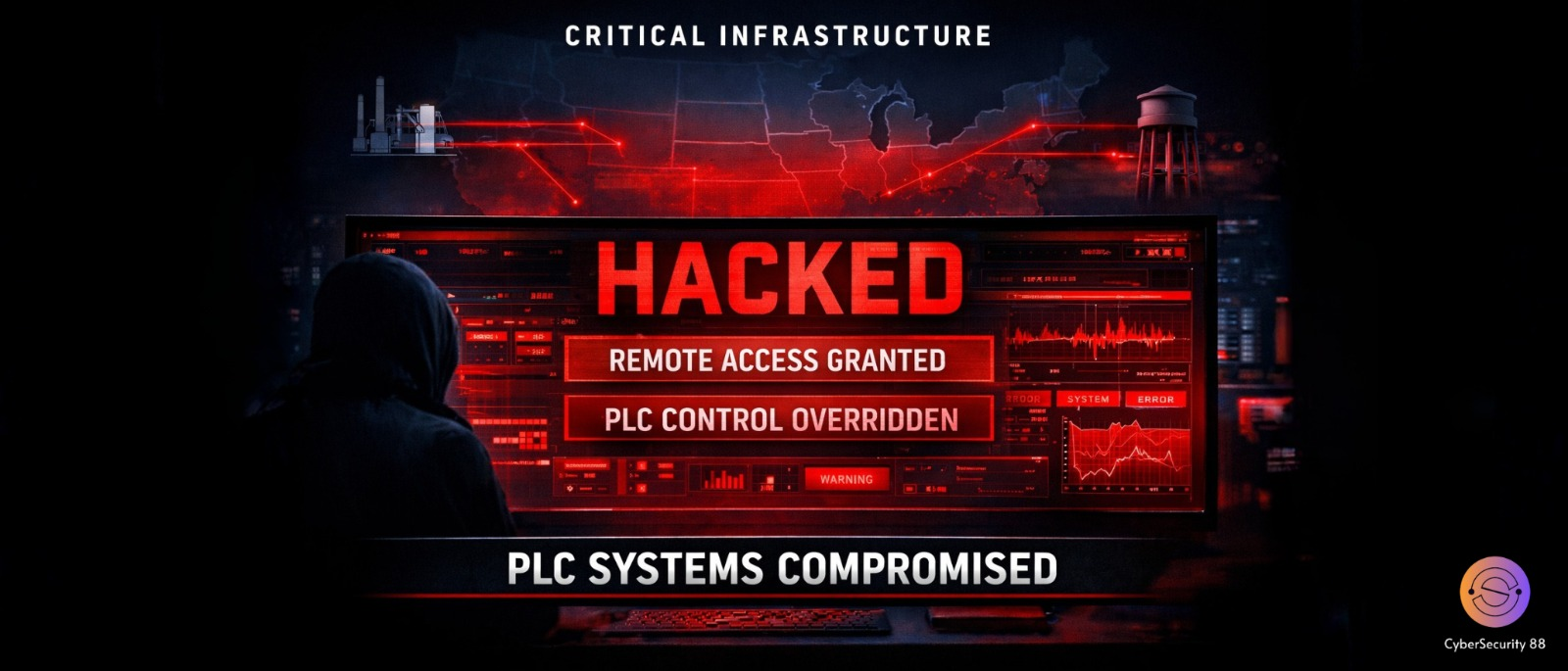
The main targets of these attacks were programmable logic controllers, commonly known as PLCs. These devices are used in industries to control machines and processes in sectors like water treatment and electricity. Many of these PLCs were connected to the internet without proper security measures. This made it easier for attackers to find and access them remotely. Internet exposure of such systems is a major weakness that attackers are actively exploiting.
Reports have shown that some of the targeted systems included Allen-Bradley PLCs developed by Rockwell Automation. These are widely used devices in industrial environments across the United States. Because of their popularity, targeting them allows attackers to affect multiple organizations at once. The hackers were able to enter operational technology environments where these devices were deployed. This access gave them control over systems that manage real-world processes.

The way the attack was carried out was quite concerning and advanced in nature. Hackers gained unauthorized remote access to the PLC systems through exposed connections. After entering, they did not just observe the system but actively changed how it worked. They modified control logic and altered the data shown on monitoring systems like HMI and SCADA. In some cases, they also accessed project files and system configurations for deeper control.
The impact of these attacks was real and not just a theoretical risk. Several organizations experienced disruptions in their systems due to this activity. PLC devices showed reduced performance and in some cases stopped functioning properly. Operators also saw incorrect or manipulated data on their monitoring screens. Such situations can be very dangerous, especially in sectors like water and electricity where accuracy is critical.
These cyber activities have been linked to groups that are believed to be connected with Iran. One such group often mentioned by experts is CyberAv3ngers, known for targeting infrastructure systems. There are also indications that these groups may have links to Iran’s Islamic Revolutionary Guard Corps. However, cyber attribution is always complex and not always fully confirmed. Still, the pattern and evidence strongly point toward Iran-linked actors.
The timing of these attacks is also important to understand in a larger context. Experts believe that this activity is part of growing cyber tensions between Iran and the United States. Instead of direct physical conflict, countries are increasingly using cyber methods to respond or apply pressure. These attacks can act as a form of retaliation without open warfare. This makes cyber warfare a powerful and less visible tool in global conflicts.
In response to this situation, U.S. agencies have issued strong warnings and safety recommendations. Organizations have been advised to disconnect PLC systems from the public internet wherever possible. They are also encouraged to update systems, apply security patches, and improve monitoring. Strengthening cybersecurity practices is now more important than ever. This incident clearly highlights the need to protect critical infrastructure from modern cyber threats.
Stay alert, and keep your security measures updated!
Source: Follow cybersecurity88 on X and LinkedIn for the latest cybersecurity news