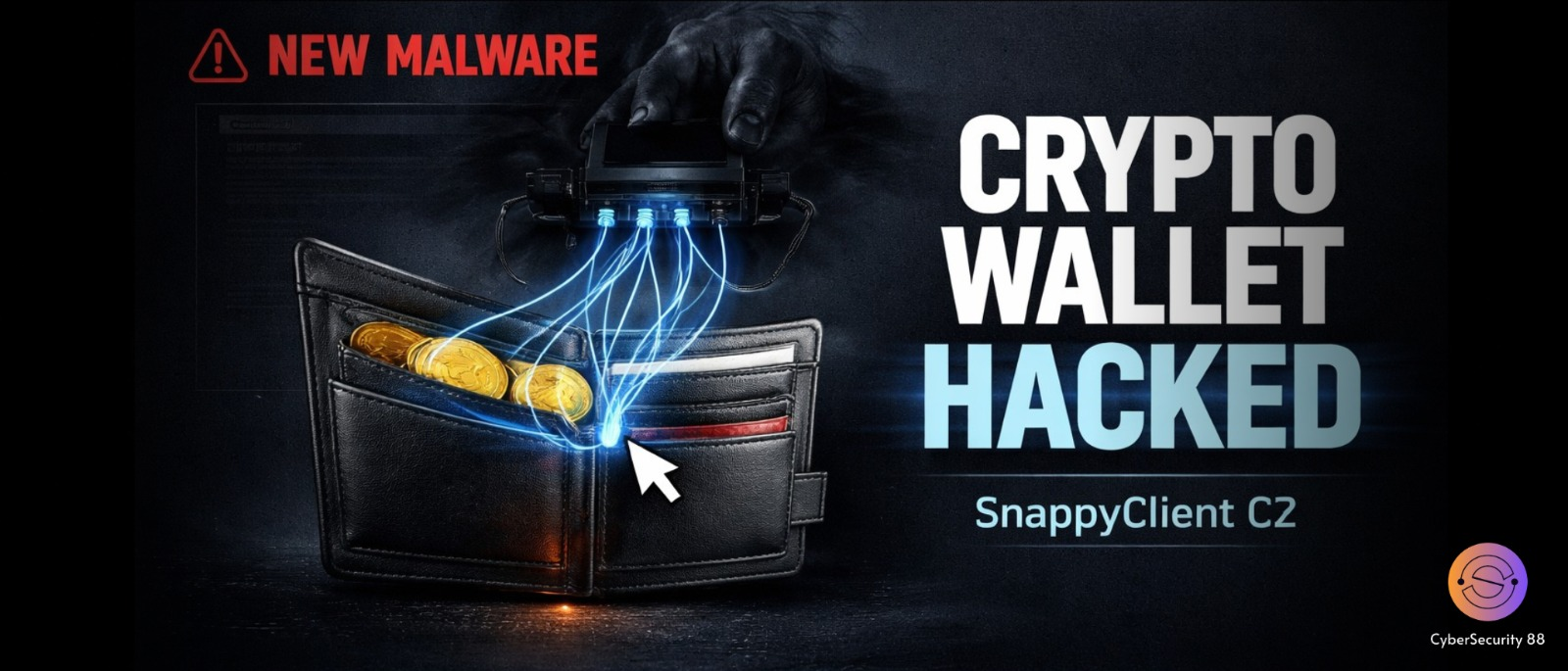
A new cybersecurity threat called “SnappyClient” has been discovered and it is mainly targeting cryptocurrency users. Security researchers have identified it as a command-and-control (C2) implant used by attackers. This means hackers can remotely control an infected system without the user knowing. Its main goal is to steal sensitive data, especially from crypto wallets.

SnappyClient is developed using C++ and is designed to stay hidden inside a system for a long time. Once it infects a device, it gives attackers multiple powerful capabilities. These include taking screenshots and recording keystrokes from the user. It can also provide remote command shell access to attackers silently.
The malware mainly spreads through fake websites created by attackers to look real. These websites often appear like trusted telecom or service provider platforms. When a user visits them, a malicious file is downloaded into the system. This file installs SnappyClient using a malware loader called HijackLoader.

In some cases, attackers also use social engineering techniques to spread this malware. These include fake prompts or ClickFix-style tricks to fool users easily. Users are convinced to run harmful files on their own systems unknowingly. This increases the success rate of the attack significantly.
SnappyClient uses advanced techniques to avoid detection by security tools. It can bypass Microsoft’s AMSI protection and run in 64-bit mode for stealth. The malware injects its code into legitimate system processes to hide itself. It also uses direct system calls to stay undetected by antivirus programs.

Another important feature is its strong persistence mechanism inside the system. It creates scheduled tasks or registry entries to remain active after restarts. The malware communicates with its command server using secure encryption methods. This allows attackers to send commands and receive stolen data safely.
SnappyClient mainly targets sensitive data stored inside web browsers. This includes saved passwords, cookies, and active session information. It also focuses on stealing cryptocurrency wallet-related data from users. It supports browsers like Chrome, Firefox, Edge, Brave, and Opera.

Security experts believe this malware is part of a larger cybercrime operation. It can be updated remotely to change its behavior or target different data. There are signs linking it to the developers behind HijackLoader malware. This shows that modern cyber attacks are becoming more advanced and organized.
Stay alert, and keep your security measures updated!
Source: Follow cybersecurity88 on X and LinkedIn for the latest cybersecurity news