A letter issued by Senator Ron Wyden has sparked concern on Capitol Hill and among privacy advocates, shedding new light on the extent of government surveillance targeting U.S. lawmakers and their staff.
The letter, sent to fellow senators, reveals that major phone carriers failed to notify members of Congress about legal surveillance requests from government agencies including from the White House despite contractual obligations to do so. He included a list on his website detailing which carriers notify users of government surveillance requests and which ones do not.
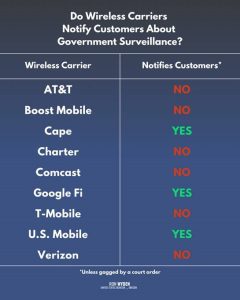
Wyden, a Democrat from Oregon and a senior member of the Senate Intelligence Committee, wrote that an investigation conducted by his office found that AT&T, T-Mobile, and Verizon had not been informing senators of surveillance orders on their mobile devices. “These crucial notifications were not happening,” Wyden stated, despite protections enacted by Congress in 2020 that require third-party providers to notify the Senate about such requests.
The Senate Sergeant at Arms had also updated carrier contracts to mandate these disclosures.
While the telecom giants have since claimed they are now issuing these notifications, the letter underscores years of undisclosed surveillance. One unnamed carrier, Wyden wrote, confirmed it had turned over Senate communications to law enforcement agencies without informing the Senate.
The revelations follow a 2023 report by the Department of Justice’s Inspector General that found the Trump administration had secretly acquired call and text logs of 43 congressional staffers and two sitting House members between 2017 and 2018. These surveillance efforts were conducted under gag orders imposed on the phone companies. Notably, the 2021 disclosures showed that Rep. Adam Schiff, then the top Democrat on the House Intelligence Committee, was one of the targets.
Wyden also highlighted foreign threats, noting that the Salt Typhoon hacking group linked to China had intercepted communications belonging to specific senators and senior congressional staff.
He further pointed out that the Department of Justice, during its own investigations, had surveilled Senate staff, including national security advisors and aides from both the Intelligence and Judiciary Committees.
The letter has renewed debate about the balance between national security and civil liberties, raising broader questions about oversight, transparency, and the safeguards meant to protect lawmakers from unwarranted surveillance.
Sources
- https://www.wyden.senate.gov/imo/media/doc/wyden_dear_colleague_on_senate_cyber_and_surveillance_surveillancepdf.pdf
- https://www.wyden.senate.gov/news/press-releases/wyden-reveals-which-phone-companies-protect-privacy-by-telling-customers-about-government-surveillance
Follow cybersecurity88 on X and LinkedIn for the latest cybersecurity news