As the world is becoming more digital , scammers are constantly learning new ways to outsmart fraud detection. Fraud appears in many different segments. From credit cards to personal data, from promotions to reservations. There is a possibility of huge losses that cannot be recovered by money, leading to more serious consequences in the long term, such as loss of reputation, misinformation eventually resulting in loss of business opportunities.

So, what is the concept of Digital Fraud?
Before you plan your precautions, it is important to know your risks closely . The most important point in combating fraud is to be able to detect and prevent fraud before it happens.
When fraud is discovered after it has already occurred, it is almost impossible to recover the losses. Imagine that you are a cybersecurity company, and your customer’s data has already been leaked. Even if you think of taking a legal action against what has happened, you can NOT recover your company’s reputation. The repercussions can be exorbitant like – the news in the media, the bad experience of your customers, the mistrust of your co-workers.
At this point, you should plan the steps you need to take before you have a bad experience to be able to establish a trust relationship with your customers. Fraud Detection can be a hero for you at this stage as it prevents you from becoming another victim of cybercrime.
Understanding What is Fraud Detection?
It is a set of activities undertaken to detect and block the attempt of fraudsters from being obtained through false pretences. Fraud detection is prevalent across banking, insurance, medical, government and public sectors as well as in law-enforcement agencies.
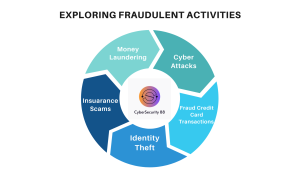
Detecting fraud is the first step in identifying where the risk lies. You can then prevent automatically or manually using fraud detection softwares, RiskOps tools, and other risk management strategies. Companies have to put steps in place to ensure that fraud is detected and stopped before it affects business.
Preventing Frauds Before They Occur
Fraud Prevention is a strategy used to stop the fraud threats before they occur. It requires the right knowledge and tools to detect fraud before it hits. For instance, a banking system identifying an unusual transaction in a location outside of your county , or a firewall blocking an attempt to access a file without authorization.
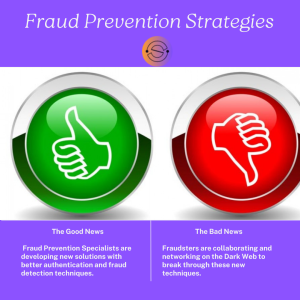
Therefore, it is critical to stay on top of the latest fraudulent tactics to prevent fraud.
To improve on your company’s cybersecurity, you need to think like a fraudster here. Attackers are using the most cutting-edge scripts they can write among an array of different AI & machine learning tools. They are constantly searching for loopholes in your defences. Attackers are dynamic thinkers who don’t let setbacks top them. What you need is AI for fraud detection. Static defences will eventually fail against cyber criminals’ cunning attempt to break into your online ecosystem.
How does AI Work in Fraud Detection?
AI uses a group of algorithms that monitor incoming data and stop fraud threats before they materialise. AI learns with historical data and can adjust its rules to stop threats it may have never seen before – something standard fraud software cannot do !
Since AI is dynamic, it also continuously works to reduce the number of false positives by improving the accuracy of its rules. It does all this at such speeds that it doesn’t impact the user experience. The best AI cyber security solutions are so light weight that they won’t impact the performance of your website or mobile app either.

Real-Time Detection : Detects threats in milliseconds providing excellent security because of its speed and dynamics.
Grows Better Over Time : AI starts getting predictious the more you feed the data with time.
Saves Time : Your employees will spend less time investigating threats and reviewing information because of AI for fraud detection. They will have more time for projects pushing your business forward instead.
Accuracy: AI algorithms can process large datasets and identify suspicious patterns with high accuracy, reducing false positives and negatives.
Related Reading: The Role of AI in Modern Fraud Detection
Types of Fraud Detection Techniques
Fraud detection generally involves data analysis-based techniques. These techniques are broadly categorised as statistical data analysis techniques and Artificial Intelligence techniques.
Statistical Data Analysis Techniques : This involves various statistical operations such as fraud data collection, fraud detection and fraud validations by conducting detailed investigations. These techniques are further subdivided into the following types :
Statistical Data Calculation : It involves various statistical parameters such as averages, quantiles, performance metrics , and probability distributions for fraud-related data collected during the data capturing process.
Regression Analysis : This allows you to examine the relationship between two or more variables of interest. It also estimates the relationship between independent and dependent variables. This helps in identifying the relationships between several fraud variables which further helps in predicting fraudulent activities.
Probability Distributions and Models : In this technique, models and distributions of various business fraudulent activities are mapped , either in terms of different parameters or possibility distributions.
Data Matching : It is used to compare two sets of collected data . The process can be carried out either based on algorithms or programmed loops. This technique is also used to remove duplicate records and identify links between two data sets for marketing , security or other purposes.
AI Based Techniques
Deploying AI for fraud prevention has helped companies enhance their internal security and streamline business processes. AI techniques includes the following methods :
Data Mining : This technique for fraud detection and prevention classifies clusters and segments the data. It automatically finds associations and rules in the data that may signify interesting patterns , including those related to fraud.
Neutral Networks : This technique performs classification, clustering, generalisation and forecasting of fraud-related data that can be compared against conclusions that are raised in internal audits or formal financial documents.
Machine Learning : Fraud detection with machine learning becomes possible due to the ability of machine learning algorithms to learn from historical fraud patterns and recognise them in future transactions. This technique either uses supervised or unsupervised learning methods.
Pattern Recognition : This technique detects approximate classes , clusters or patterns of suspicious behaviour , either automatically or manually.
The Most Common Types of Fraud
Fraud takes on many spectrums , and it adapts every business model. However, there are a few recurrent attack vectors worth knowing about:
Fake Accounts : Fraudsters falsify information or use fake ID’s to create a new account. A lax signup policy may allow easier onboarding for traction. But it also opens the door to bad agents .
Stolen Credit Card Purchase : Scammers steal credit card numbers and use them to buy services or products from your company. A chargeback is then submitted , for which you must cover the administrative fees.
Account Takeover : These are more sophisticated attacks, which use identity theft often through fishing , to steal credentials of an existing account. The end goal , however, is still the same – steal money or personal information/data from the original user.
Friendly Fraud : This happens when a customer makes a purchase with a credit or debit card , and then disputes the charge with their bank with no legitimate reason to do so. It is also known as ‘chargeback’ fraud.
Affiliate Fraud : A marketing partnership can quickly turn sour if your affiliates send bad traffic to your site on purpose. This is particularly prevalent in the i-Gaming industry where unscrupulous affiliate fraudsters target PPC & PPL acquisition models.
Return Fraud : This is another new fraud attack vector , growing in popularity due to Amazon’s frictionless Covid return policies. Fraudsters purchase items on your site and take advantage of your return policy to get free items , or intentionally deplete your inventory.
What are the Best Fraud Detection & Prevention Features ?
For fraud detection and prevention , you need to combine as many of the following features as possible :
Social Media Look Up : A very powerful way to learn if your user has a social media presence. This can be useful for compliance reasons or simply to verify someone’s ID. Make sure your solution can check as many social media networks as possible, and in as many regions as possible.
Data Enrichment : This refers to learning more information based on a single data point. This process aggregates external data to complete a picture about a user , for instance. A good example is reserve email with a single data point of an email address
Pay per API Pricing: Paying per Api offers the most flexibility as you can scale your fraud prevention usage based on your business growth. Be especially aware of chargeback-guarantee models , which incentivize vendors to be overly zealous in declining credit card payments.
Clean UX : Fraud prevention involves a lot of data visualisation. Ensure it is available in a way that is user friendly and intuitive. At the very least , you should be able to export your data and access reports to understand how a fraud prevention engine is working under the hood.
Related Reading: Fraud Detection for Small Businesses: Affordable Solutions
What are the Main Challenges of Fraud Detection?
Even with the best technology around, there are major obstacles that could impact how effective your business is in detecting fraud – or even backfire against your business goals.
False Positives Can Hurt Your Business : How do you ensure your transactions aren’t fraudulent? Block every single transaction. Of course, you’ll be preventing legitimate customers from paying on your site. This is called a false positive and the problem is that aggressively conservative tools may create a lot of them. False positives hurt your sales numbers and your business reputation. If users can not use your business, they will move to your competitor.
No ‘One-size-fits-all’ : Detection works by setting up rules. You will block suspicious IPs. Flag-strange looking devices. Or block emails found on Black-List.
Then where is the problem?
The rules that work one day may not work the next. Your risk team needs to constantly think on their feet, and remain agile with the systems in place. Moreover, what works for one business might be damaging for another. You Won’t use the same rules to catch a fish from the sea , as to detect anti Browser fingerprinting by ID fraudsters. Thus, there is NO one-size-fits-all solution , even within the same vertical . Every business needs prevention that meets its needs .
Final Thoughts
With a growing number of fraud-prevention tools on the market, it can be easy for the merchants to be confused. It is bad enough that the companies have to deal with relentless attacks. On top of that, they must now face the challenge of vetting the right solution as an important business decision.
Remaining informed , whether it is about the latest attack techniques or cybersecurity tools , is always the best way to stay one step ahead of the fraudsters , and your competitors.