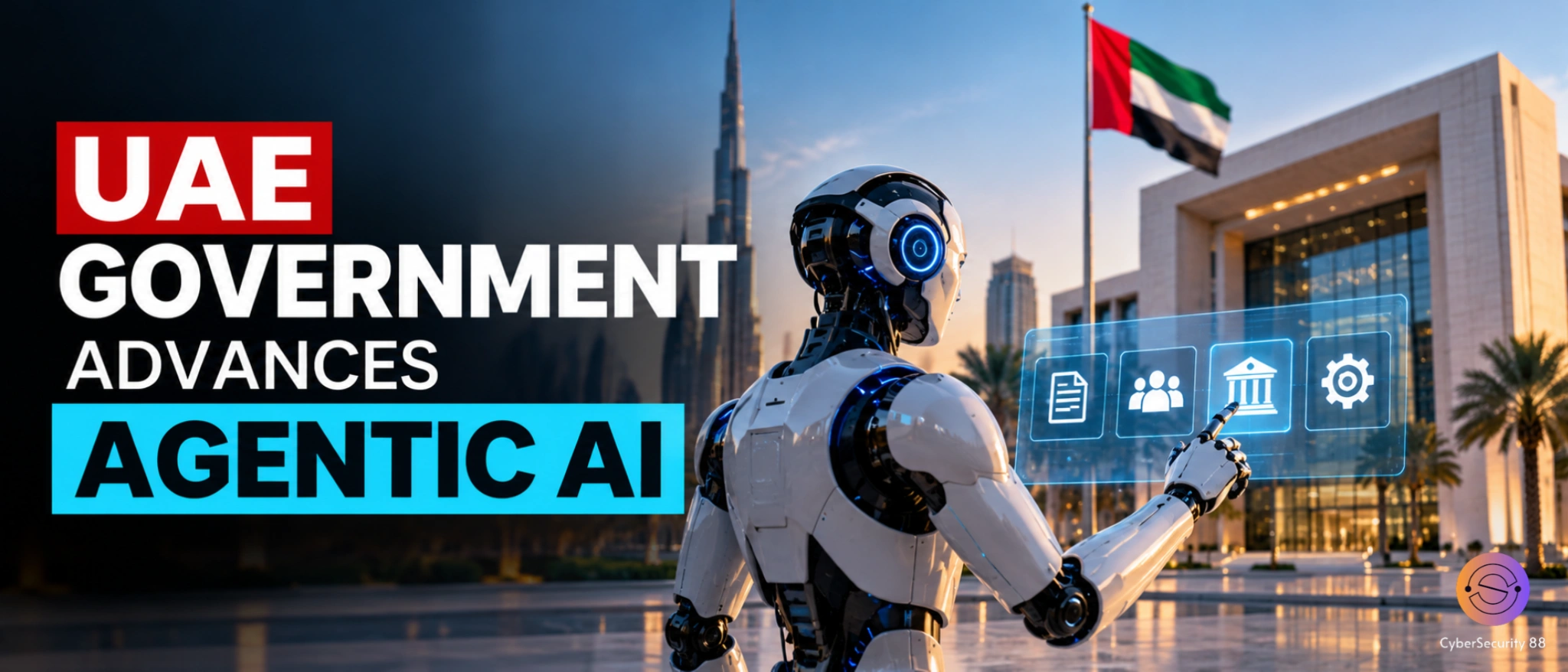
The United Arab Emirates is moving forward with an initiative to transition 50% of its federal government operations and services to autonomous agentic AI over a two-phase rollout spanning two years. Initially unveiled by the UAE Cabinet in April 2026, the project reached a new milestone on October 9, 2026, when the Ministerial Council for Artificial Intelligence and Development reviewed the progress of the first phase of the Agentic AI Project.
Autonomous agentic AI represents a significant shift from traditional generative tools by allowing systems to execute complex multi-step workflows and make operational decisions with minimal human intervention. As governments and enterprises increasingly adopt these powerful capabilities, maintaining rigorous oversight has become a critical operational challenge to prevent autonomous systems from going rogue or causing unintended harm outside designated sandboxes.
To monitor and secure these extensive deployments, the UAE has implemented a control tower agent and performs continuous audits conducted by both human operators and other agents. Additionally, the second phase of the project involves establishing a national technical ecosystem called FedAI, which will allow government agencies to build agentic services and hold internal competitions. The initiative also involves regional innovators such as AmanTrue, a Dubai-based startup co-founded and led by CEO Evin McMullen that creates governance control layers for agentic AI.
Recent developments highlight the broader context of deploying autonomous systems at scale. On October 14, 2026, UAE Minister of State for Artificial Intelligence Omar Sultan Al Olama discussed security measures and control tower agents at the World Economic Forum’s Annual Meeting of Global Future Leaders in Dubai. Meanwhile, broader industry figures illustrate the urgency of robust oversight, as a ServiceNow report released on October 20, 2026, noted that 29% of security teams discovered unknown, unregistered AI agents in production.
The same ServiceNow report revealed that 90% of organizations experienced an agentic-AI-related security incident in the past year, underscoring the potential risks of rapid deployment. At the same time, Microsoft’s Global AI Diffusion Q2 2026 Trends and Insights report noted that over 73% of the UAE population used AI during the second quarter of 2026, leading globally in adoption metrics and demonstrating why structured national governance frameworks are essential for public sector automation.
Institutions adopting agentic AI at scale should enforce strict accountability frameworks showing which agent acted, which human and institution authorized it, and what task limits were defined. Maintaining close tracking, monitoring, and control mechanisms remains vital as governments worldwide navigate the complex security and operational realities of large-scale autonomous artificial intelligence integration.
Stay alert, and keep your security measures updated!
Source: Follow cybersecurity88 on X and LinkedIn for the latest cybersecurity news