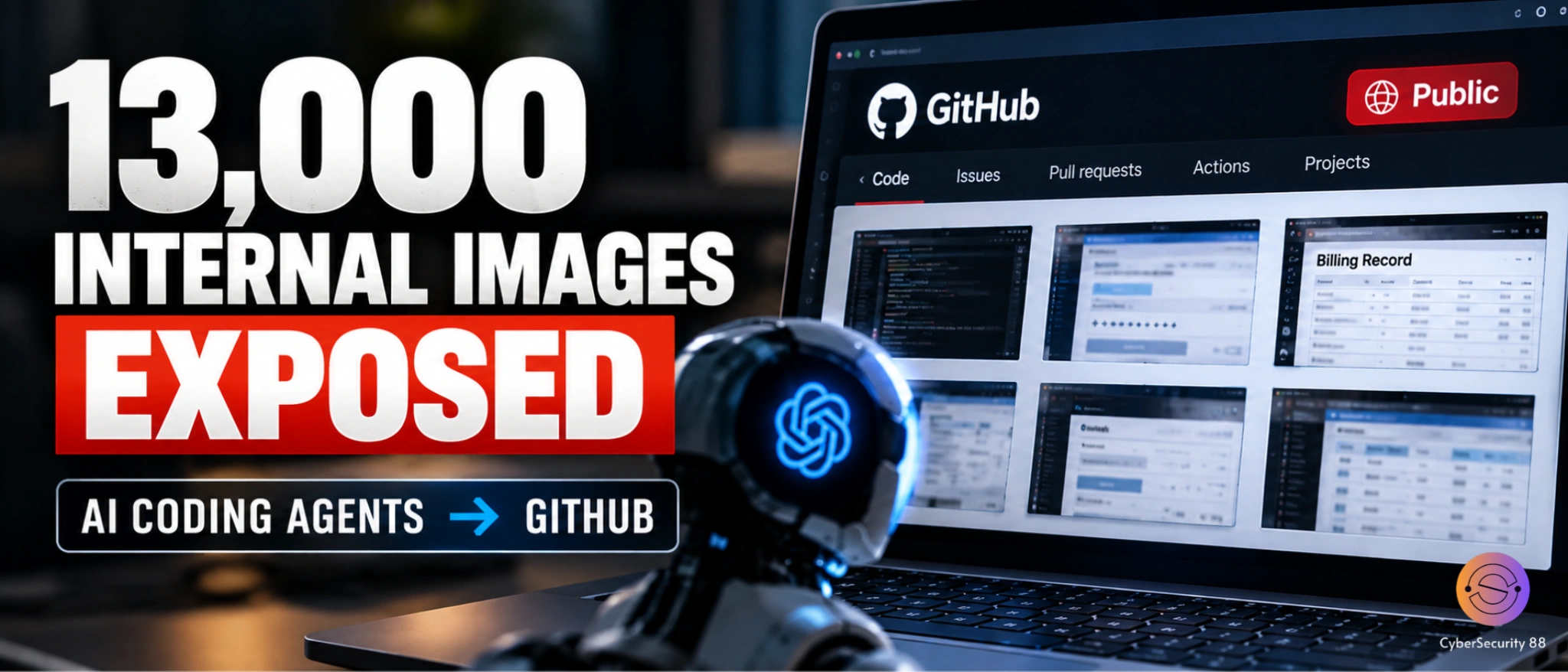
A new security study has revealed a serious weakness in many popular open-source AI coding agents. Researchers from Adversa AI named this issue GuardFall, describing it as a structural security problem rather than a single software bug. The flaw allows attackers to use decades-old Bash shell techniques to bypass safety checks built into AI coding tools. As more developers depend on AI agents, this issue raises new concerns about software supply chain security.
The researchers tested 11 widely used open-source AI coding agents, including tools such as Hermes, OpenCode, and Roo Code. Their findings showed that 10 of the 11 tested agents failed to block one or more shell injection techniques. Only one tool, Continue, successfully stopped every attack used during the testing. The results suggest that many AI coding assistants still lack strong protection against well-known command injection methods.
The GuardFall attack works by abusing old Bash shell features such as quote removal and special shell variables that help separate command arguments. These techniques can hide dangerous commands from the AI agent’s security filters while still allowing the Bash shell to execute them correctly. These techniques can hide dangerous commands from the AI agent’s security filters while still allowing the Bash shell to execute them correctly. Since many AI agents rely on pattern-matching rules instead of understanding the final command, attackers can slip malicious instructions past existing safeguards.

According to the researchers, an attacker could place hidden commands inside files such as a README, Makefile, or other project resources stored in a malicious repository. When a developer asks the AI coding agent to inspect or work with those files, the agent may unknowingly generate and execute harmful shell commands. If automatic execution is enabled or the user approves the request, sensitive data such as cloud credentials could be exposed or development environments could be damaged.
The research explains that the weakness is not caused by the language model alone but by the way AI coding agents process and validate shell commands. The researchers identified several categories of bypass techniques, with one group called “Class E” proving especially effective. These attacks change the structure of command arguments without changing their final effect, making them much harder for simple security filters to detect.
Although exploiting GuardFall requires multiple conditions to be met, the researchers warn that the risk is real. The AI model must cooperate with the request, and the environment must allow the generated command to run. Systems using auto-execute features or continuous integration pipelines with automatic approval are considered to face a much higher level of risk because harmful commands may run without careful human review.
As a temporary defense, Adversa AI recommends running AI coding agents inside restricted shell environments that isolate sensitive files and credentials. Redirecting the user’s home directory and limiting access to SSH keys, cloud credentials, and shell history can significantly reduce the damage if a malicious command is executed. These protections act as an additional security layer while developers continue using AI-powered coding assistants.

For a long-term solution, the researchers recommend that open-source AI coding projects adopt stronger command validation similar to the approach used by Continue. Instead of relying only on pattern-based filtering, AI agents should tokenize, normalize, and fully analyze shell commands before allowing them to run. The GuardFall research highlights that even decades-old shell injection techniques remain dangerous when combined with modern AI coding tools, making stronger security controls essential as AI becomes a larger part of software development.
Stay alert, and keep your security measures updated!
Source: Follow cybersecurity88 on X and LinkedIn for the latest cybersecurity news