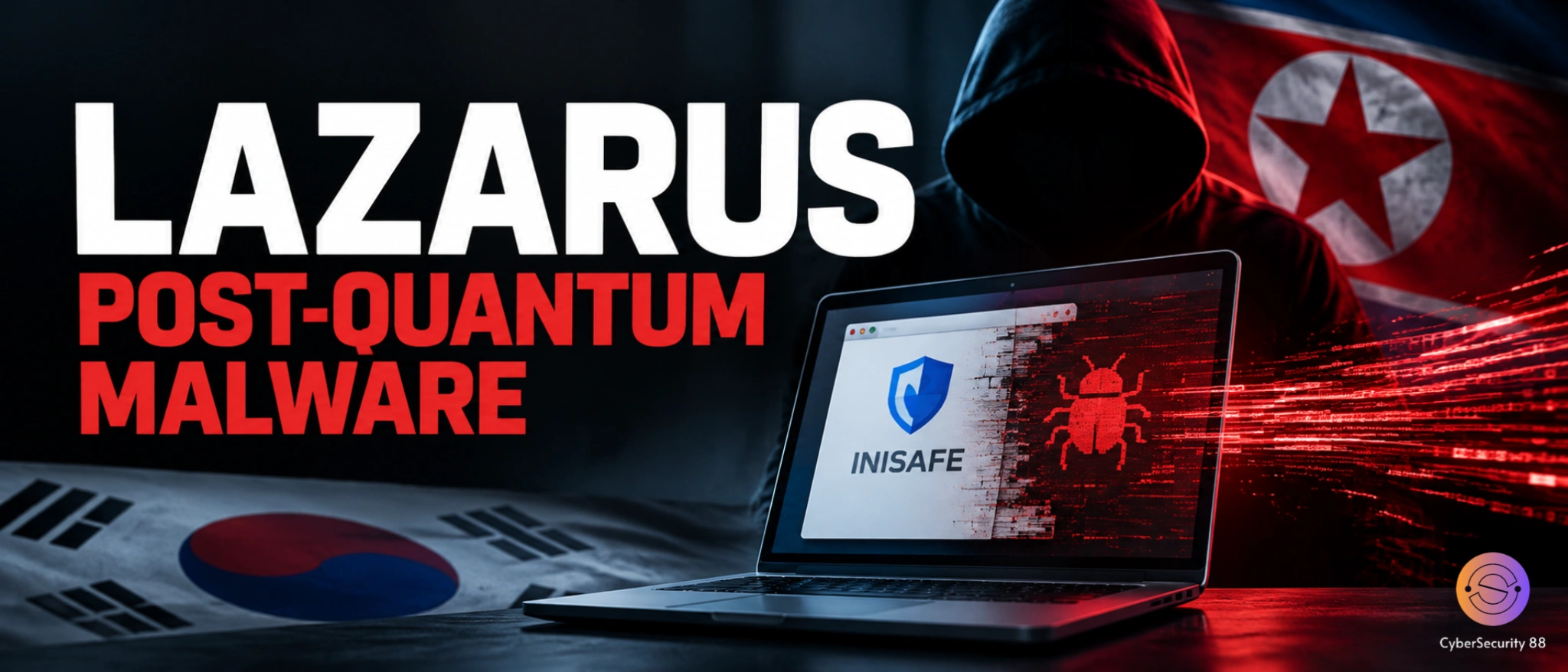
The North Korea-linked threat actor known as the Lazarus Group has been tied to a targeted cyber espionage campaign designated Operation FlashHole. According to an analysis published by The Hacker News on 27 October 2026, the sophisticated campaign has focused its efforts on South Korean organizations operating within critical industries, including construction, software development, and wire-communication equipment manufacturing.
In this newly detailed operation, the threat actors leverage trusted third-party applications as an initial vector to compromise corporate environments. Specifically, the campaign abuses Initech’s INISAFE CrossWeb EX software, allowing the attackers to bypass standard defensive perimeters and deliver a complex payload directly into target systems without triggering immediate alarms.
The primary objective of the intrusion involves the deployment of a memory-resident malware framework designed to maintain stealth and persistence within infected networks. A notable aspect of the malware is its implementation of advanced cryptographic techniques, utilizing the ML-KEM-1024 post-quantum cryptographic algorithm to secure communications between the compromised endpoints and external command-and-control infrastructure.
Security researchers tracing the group’s evolving capabilities noted that the adoption of post-quantum cryptography by the Lazarus Group is not entirely unprecedented. Historical tracking indicates that the use of these advanced cryptographic algorithms by the threat actor dates back to at least September 2024, demonstrating a sustained effort to future-proof their operational security against impending cryptographic decryption methods.
This ongoing campaign underscores the persistent espionage threat posed by state-sponsored actors targeting East Asian industrial sectors. By turning legitimate security and administrative software against corporate networks, the attackers highlight significant challenges in detecting malicious activity that masquerades as trusted enterprise processes.
Organizations are advised to review administrative software inventories, monitor for anomalous memory-resident processes, and implement robust behavioral monitoring to detect unauthorized exploitation of trusted applications. Security teams must remain vigilant as advanced threat actors continue to innovate their tradecraft by integrating emerging technological standards into malicious operations.
Stay alert, and keep your security measures updated!
Source: Follow cybersecurity88 on X and LinkedIn for the latest cybersecurity news