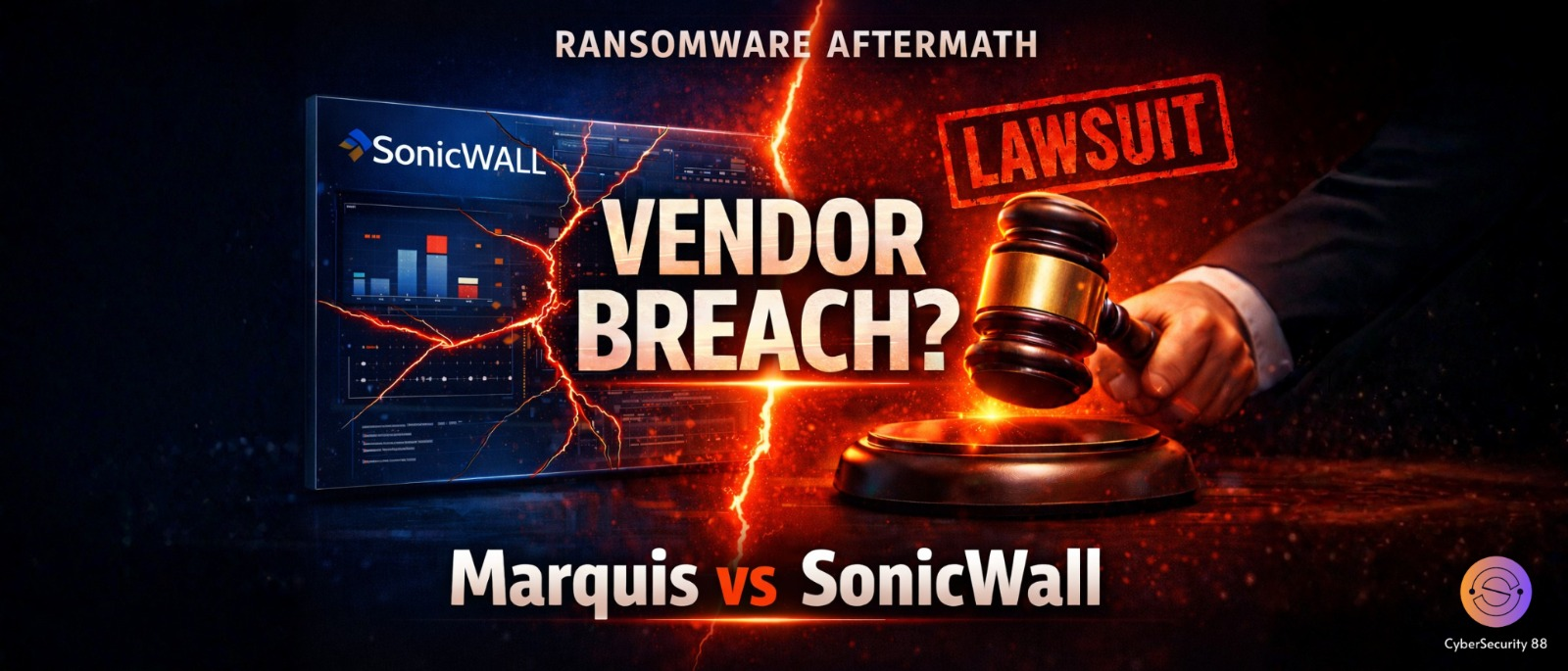
Marquis Software Solutions has filed a lawsuit against cybersecurity company SonicWall after a major ransomware attack. The case was filed in February 2026 in a U.S. federal court in Texas. Marquis provides software services to hundreds of banks and credit unions across the United States. The company claims SonicWall’s earlier security failure played a direct role in the attack.
According to the lawsuit, hackers accessed sensitive firewall configuration data stored in SonicWall’s cloud backup system. This data allegedly included emergency access codes and important configuration details. Marquis says this information helped attackers break into its network. The company claims the attackers were able to bypass security protections, including multi-factor authentication.
The ransomware attack happened in August 2025 and caused serious disruption. Marquis serves more than 700 financial institutions, and many of them were affected. Later, several banks notified customers that personal information had been exposed. The compromised data reportedly included names, addresses, Social Security numbers, and financial account details.
Marquis argues that SonicWall first disclosed a breach of its cloud backup service in September 2025. At that time, SonicWall reportedly said only a small number of customers were impacted. However, the lawsuit claims SonicWall later admitted that all customers using the MySonicWall backup service had their firewall backup files stolen. Marquis believes this earlier breach led directly to the ransomware incident.
The complaint also raises concerns about how SonicWall stored backup data. Marquis alleges that certain sensitive elements, including emergency MFA scratch codes, were stored without encryption. The lawsuit further claims that predictable device serial numbers made it easier for attackers to access backup files. These alleged weaknesses, according to Marquis, increased the overall security risk.

Marquis states that the ransomware attack caused major financial and operational damage. The company says it had to spend heavily on forensic investigations and response efforts. It also faced costs related to legal matters, customer notifications, and system recovery. In addition, Marquis claims the breach harmed its reputation and business relationships.
SonicWall has responded by saying it is reviewing the allegations. The company has stated that it has not yet found evidence proving a direct technical link between its earlier incident and the Marquis ransomware attack. SonicWall has indicated that it intends to defend itself in court. The legal process is expected to take time as both sides present their arguments.
Cybersecurity experts say this case could become important for the entire industry. It raises the question of whether security vendors can be held responsible when their own breaches affect customers. Traditionally, companies that suffer attacks handle the consequences themselves. If the court rules in favor of Marquis, it could change how liability is viewed in future cybersecurity cases.
Stay alert, and keep your security measures updated!
Source: Follow cybersecurity88 on X and LinkedIn for the latest cybersecurity news